
Skin monitoring is an essential aspect of overall good health. Moles are very common and do not pose any health threats on their own, although some changes observed in their physical appearance could require further professional assessment. The people from Colleyville who would like to learn more about healthy skin often turn to the Internet in order to find out more relevant information.
Understanding What Moles Are
Moles, also referred to as nevi, are clumps of melanin-producing cells found on the skin. Moles occur either in childhood or adulthood and are characterized by varying sizes, shapes, colors, and textures. While some individuals possess a few moles, others may have many more distributed all over the body.
The majority of moles tend to be stable throughout one’s lifetime and pose no risk at all to health. Nevertheless, such aspects as genetics, age, and long-term exposure to ultraviolet (UV) rays play a role in how moles evolve. Awareness of normal mole characteristics helps one distinguish anything unusual.
Common Signs of Mole Changes
Not all changes in moles are indicative of something serious, but some changes require more attention. A mole that has become bigger, altered its shape or has developed irregular borders needs to be examined. The appearance of changes in color or several colors within one mole is another thing that should be considered.
The presence of irritation, tenderness, bleeding, crusting or a new mole at the age of adulthood is among the symptoms that require medical assistance, despite not necessarily being a sign of skin cancer. Self-examination will allow one to get used to their skin and detect such changes easily.
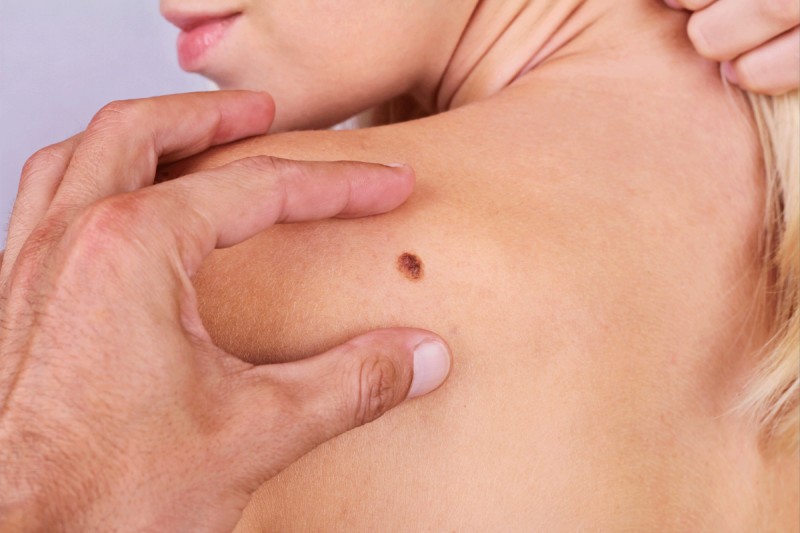
The ABCDE Guide for Self-Examination
The ABCDE rule is often advocated by dermatologists for the evaluation of moles. The following criteria can serve as grounds for further evaluation of a suspicious mole.
- Asymmetry– It occurs when one side of a mole differs from the other.
- Borders -It refer to uneven and unclear edges of a mole.
- Color – It indicates variations in color within the same mole.
- Diameter – Large moles that are about six millimetres in diameter are suspicious, but sometimes even smaller ones might require evaluation.
- Evolution – That is, any changes in a mole’s appearance, symptoms, or features. Of course, this rule should not be used as a substitute for professional examination.
The Importance of Routine Skin Checks
Skin check-ups on a regular basis will go a long way towards identifying any problem early enough before it gets worse. Self-examination once a month will make one more aware of what healthy skin looks like. Hard-to-see areas such as the back and head need some help from a family member or the use of mirrors. Expert skin examination is another method that provides a more detailed evaluation. Dermatologists are trained professionals who can tell apart benign skin growths from those that need further tests.
Reducing Risk Through Healthy Habits
While not all skin problems can be prevented, having good habits can significantly lower one’s chances of getting abnormal moles. Applying broad-spectrum sunscreen, staying in the shade during the brightest hours of sunshine, and using clothing that will protect one from the sun’s UV rays are some ways in which this can be done. It is also recommended that one avoid indoor tanning because it has been shown to increase the likelihood of damaging the skin. Checking one’s skin periodically is another way of doing this.
Promoting Skin Health in Colleyville
Knowledge is still one of the best ways to protect skin from harm. If one knows what healthy moles should look like and one is aware of certain signals that indicate that there is something wrong, one will be able to react in time. If one lives in Colleyville, one has an opportunity to stay informed and get one’s skin examined whenever it seems necessary. Those people who want to find out more about taking care of their skin can do so.